
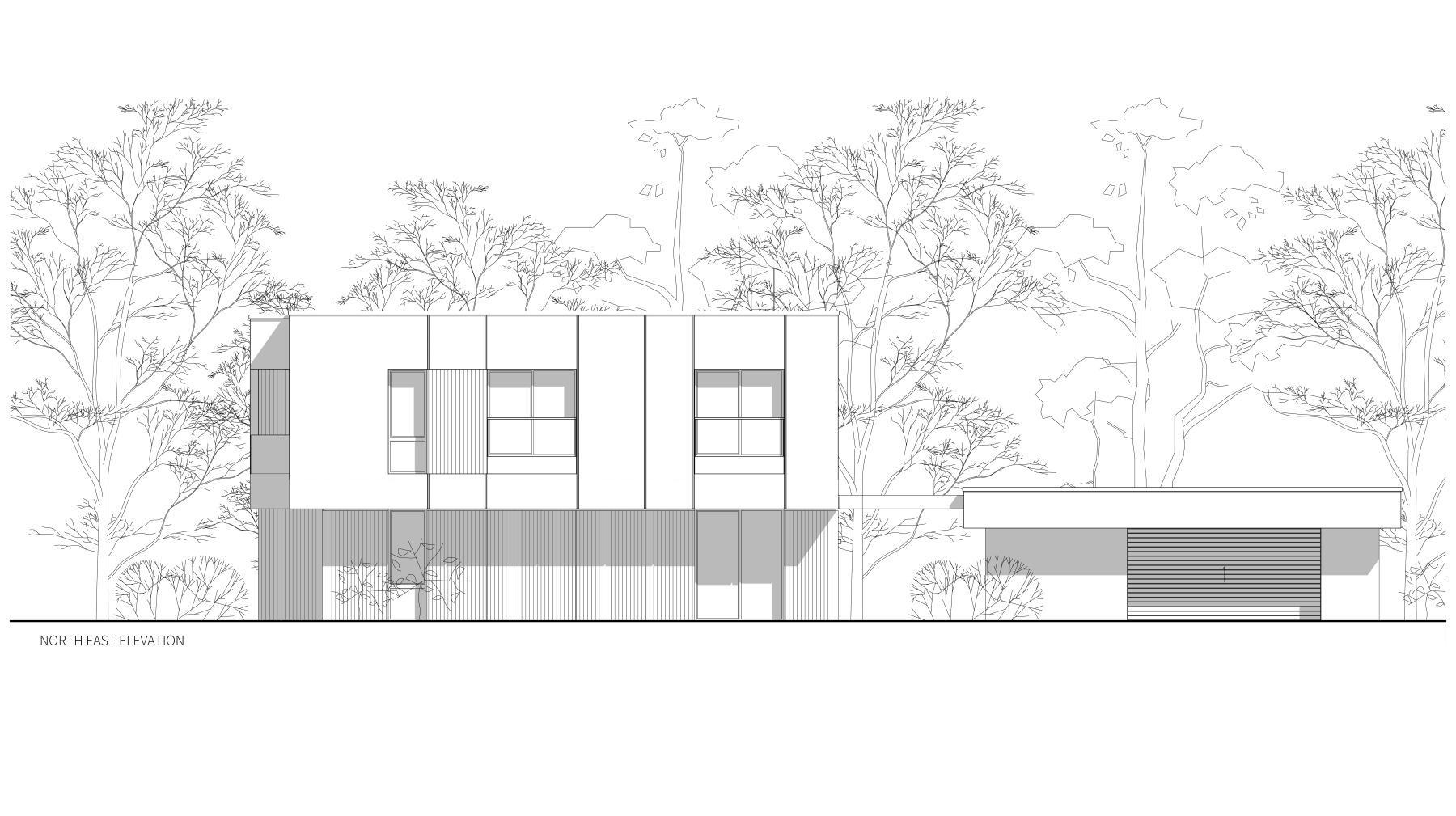
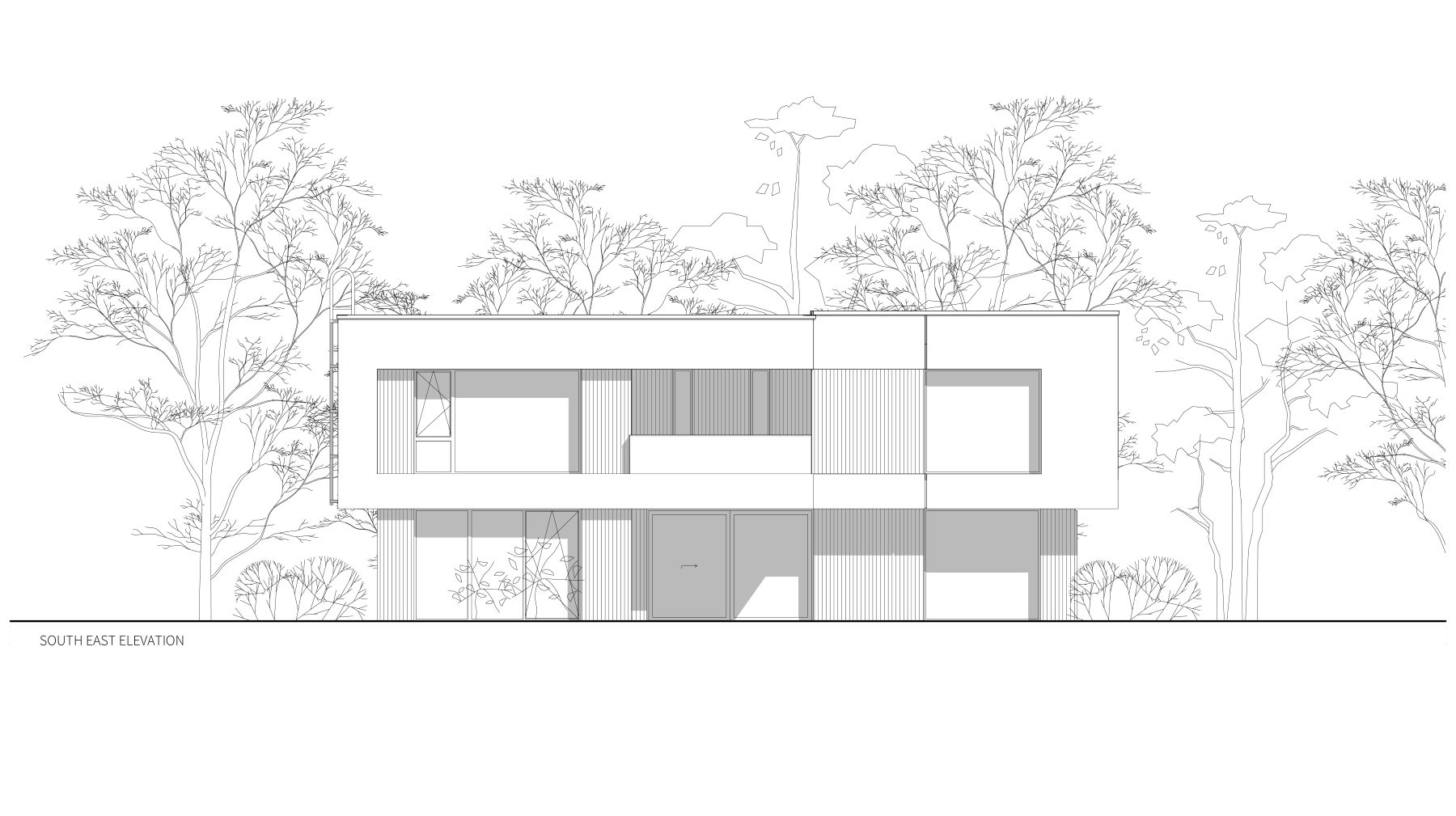
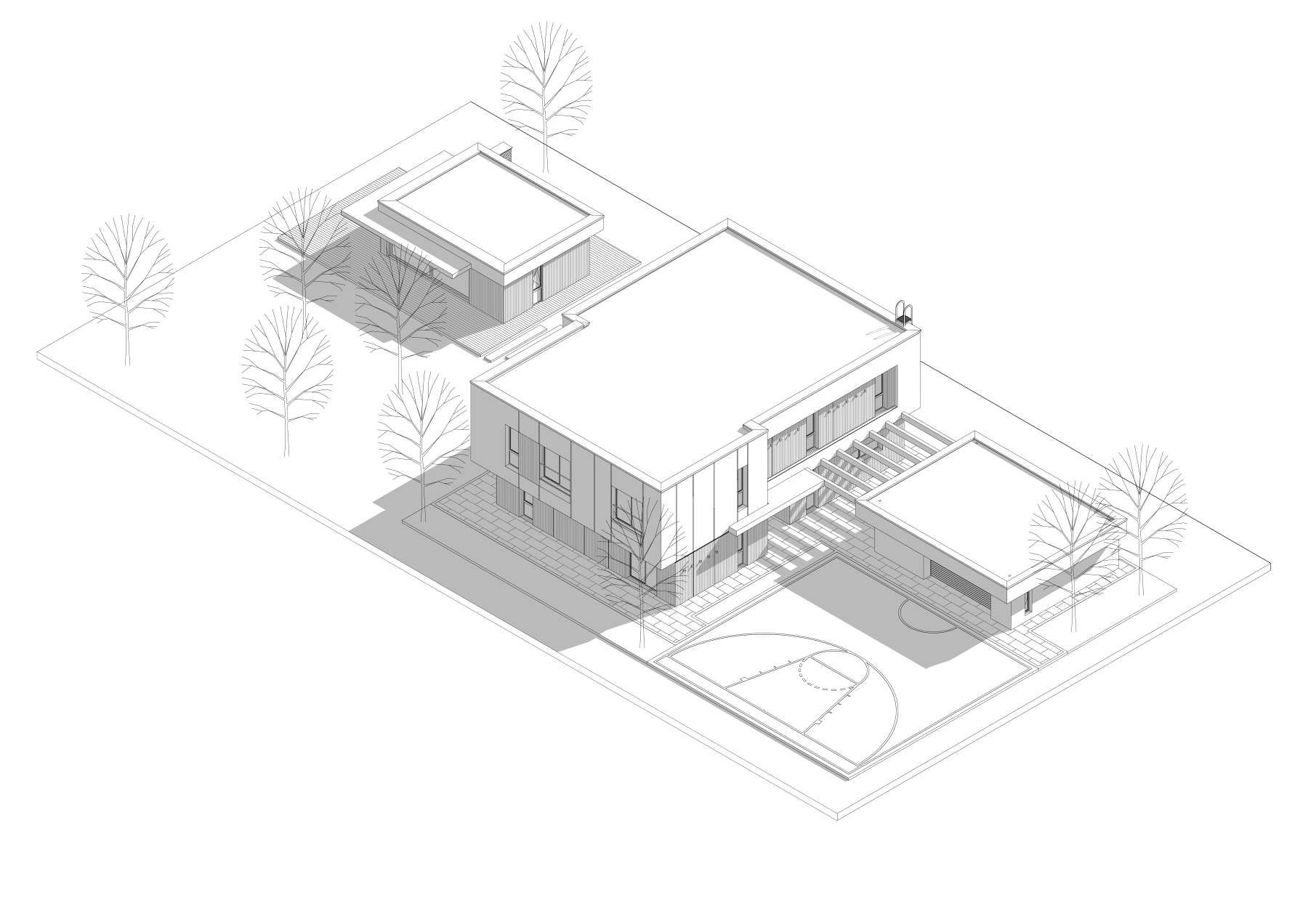
Bunloc, Private House
- Location: Bunloc, Brașov, Romania
- Year: 2020
- Status: In progress
- Role: Project Architect
Project Overview
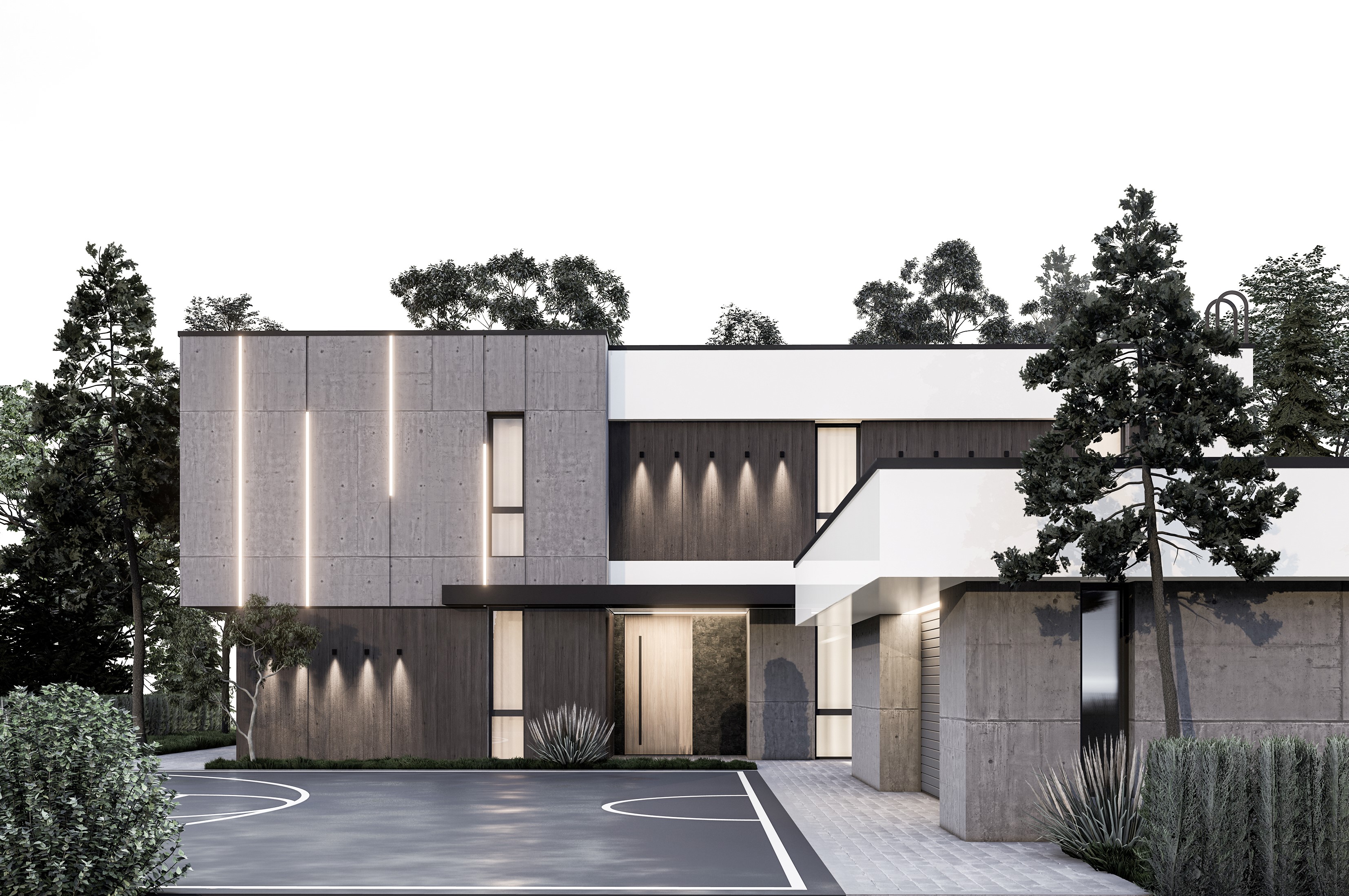
Situated at the foot of the Bunloc hills in Brașov, this single-family residence is a bold interpretation of contemporary mountain living. The project emphasizes a strong geometric language, a refined material palette, and a seamless connection between indoor and outdoor environments. Designed to respond to its natural surroundings while asserting a modern architectural identity, the house offers a private and serene retreat for its residents.
Architectural Concept
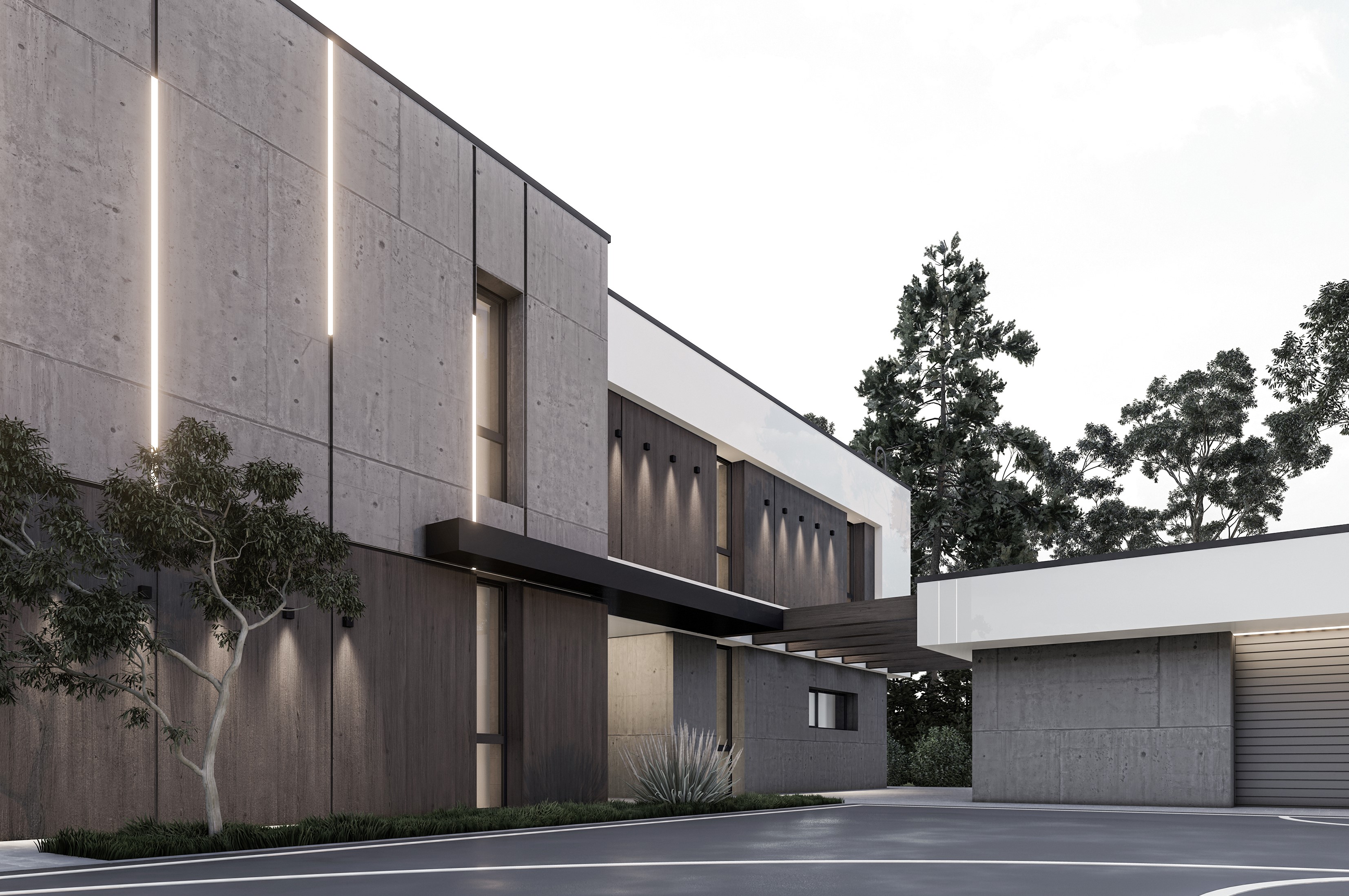
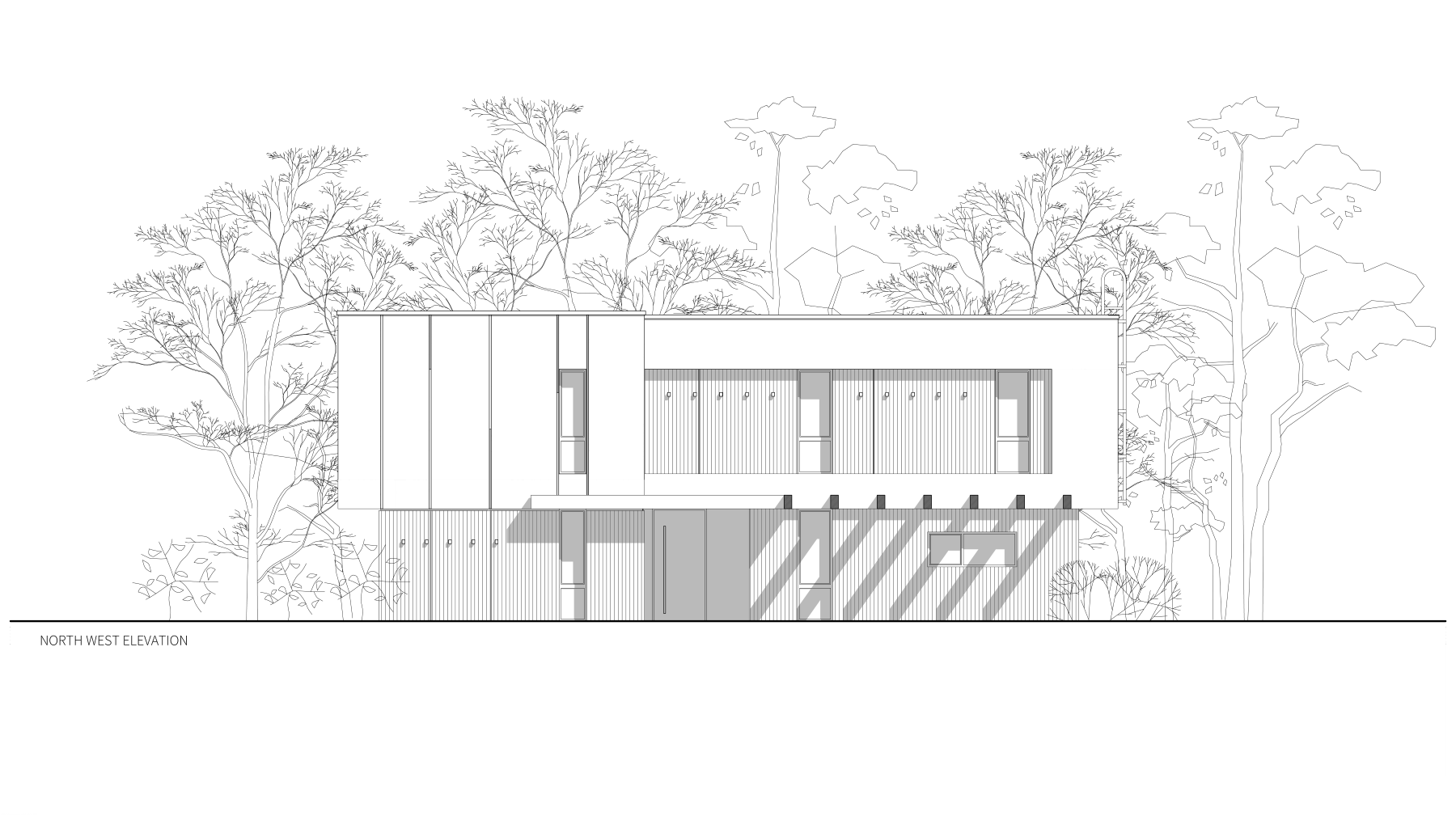
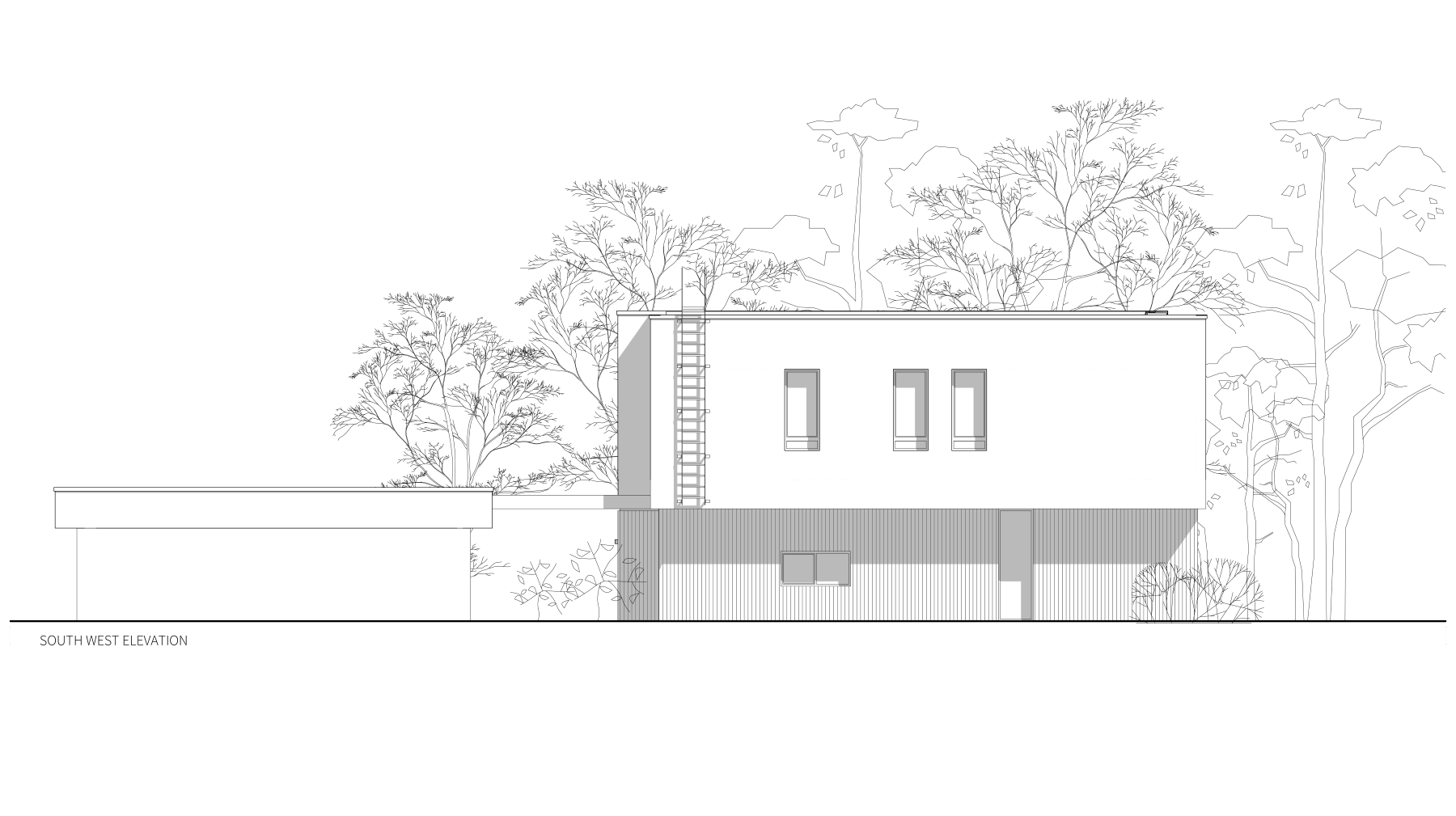
The house is defined by clean horizontal lines, textured concrete volumes, and contrasting dark wood cladding. Light and shadow animate the façade through integrated vertical lighting and deeply recessed openings. The design balances solidity with transparency, using large panes of glazing to blur the line between interior and exterior, while maintaining privacy through controlled openings and deliberate massing.
Spatial Organization
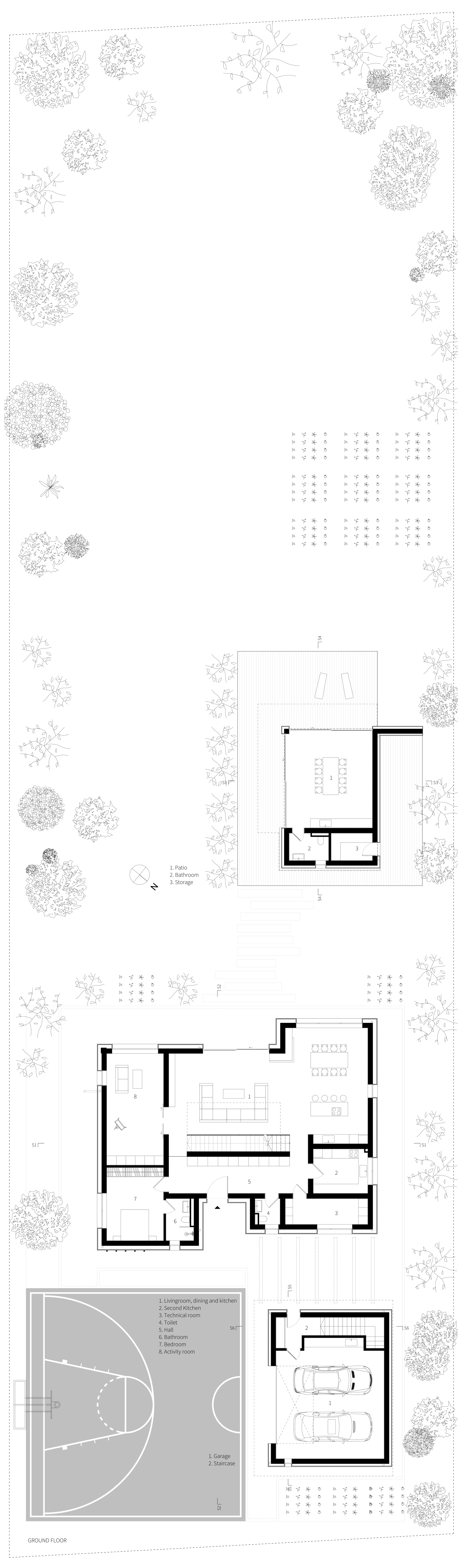
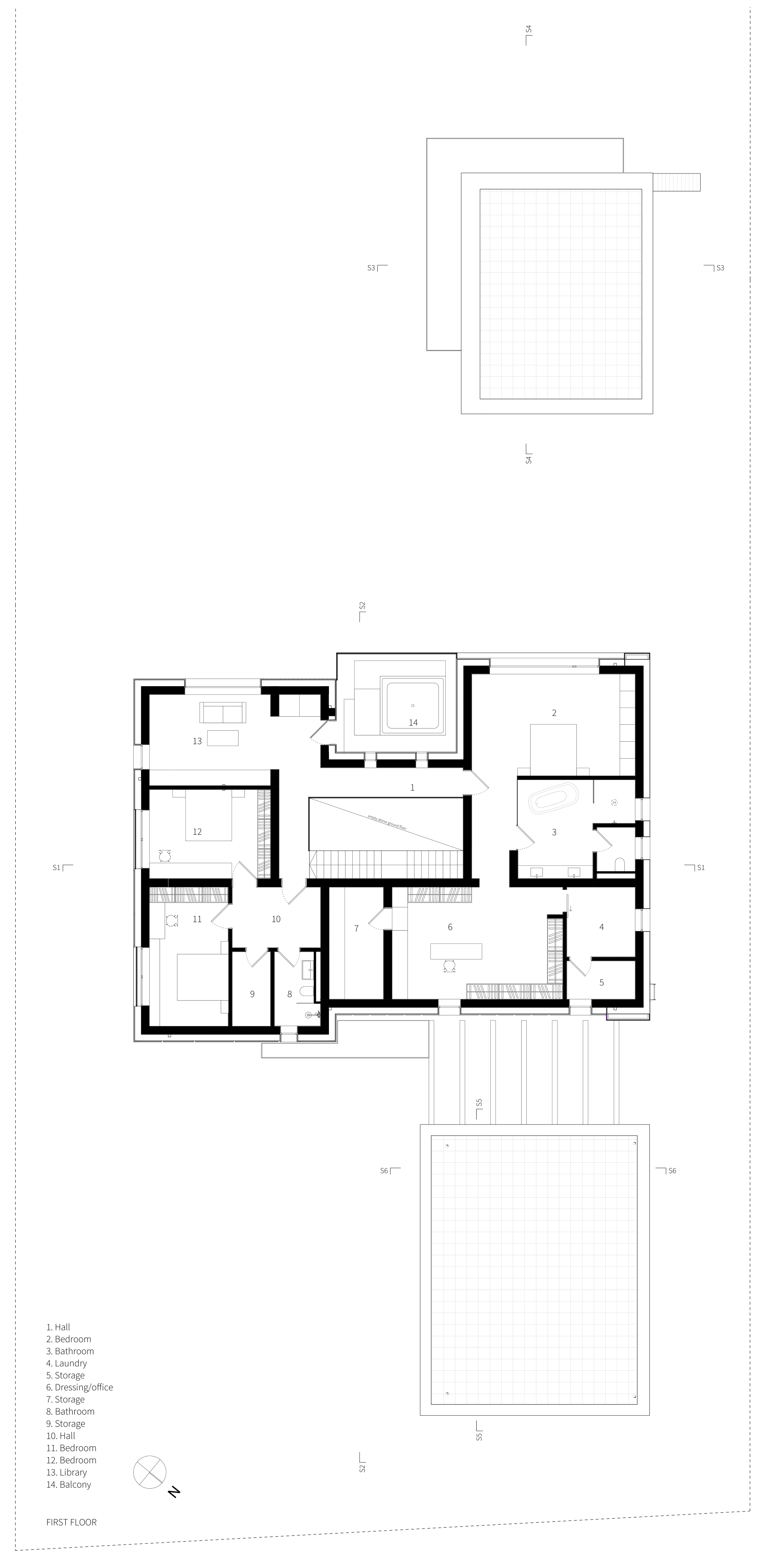
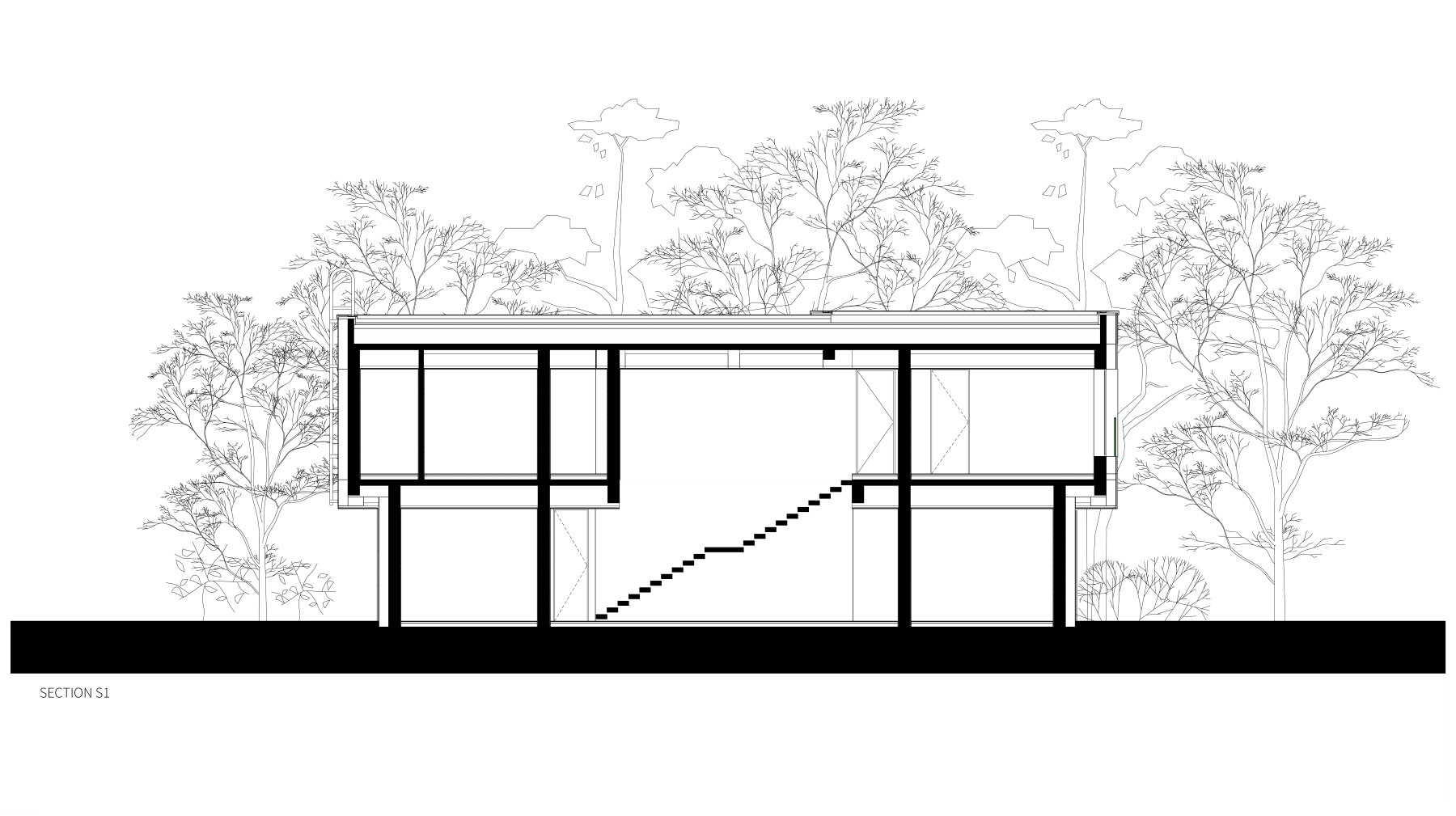
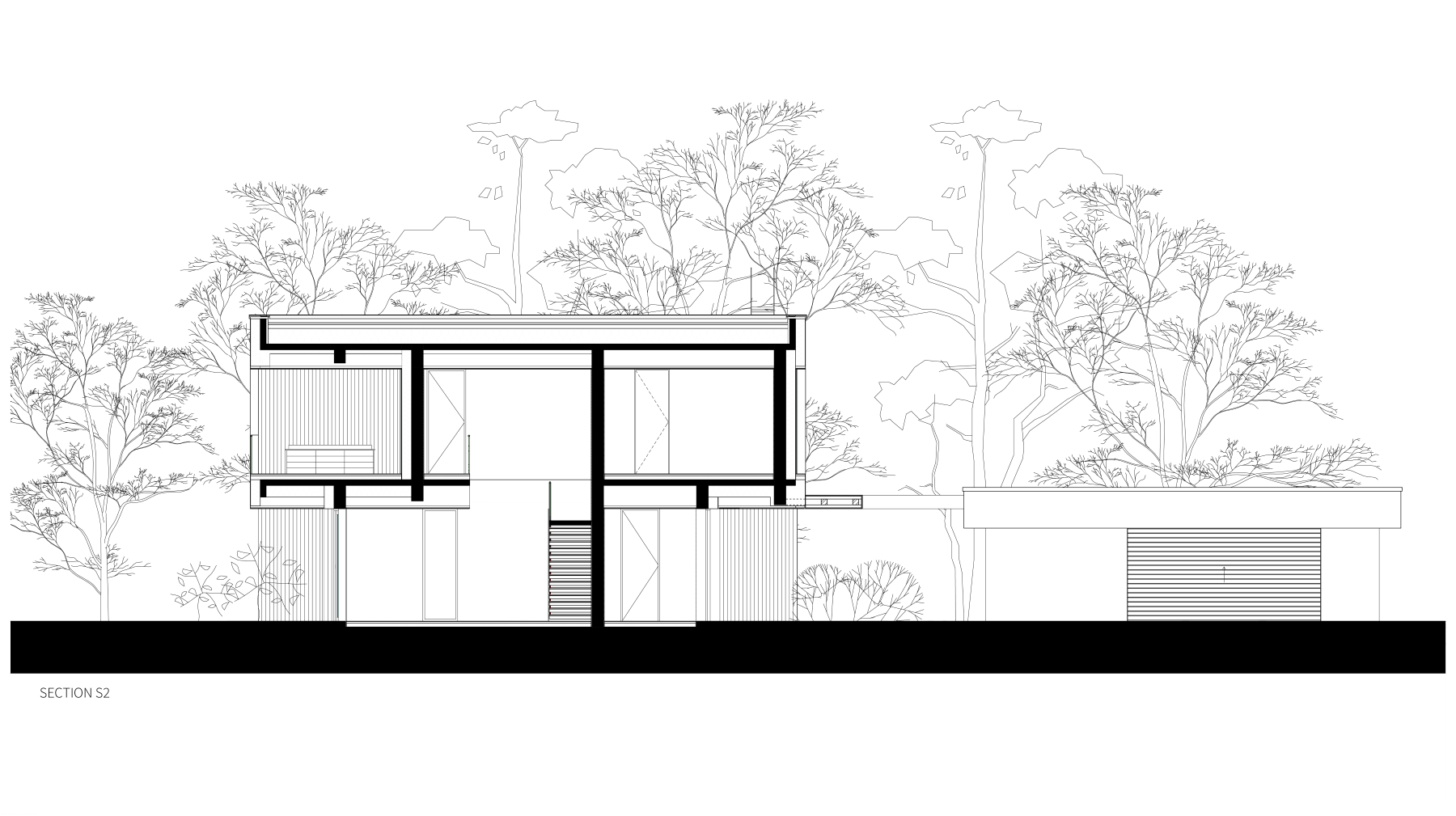
The ground floor is organized around a central axis, with public functions such as the kitchen, dining, and living areas opening toward the landscape. A visual connection is maintained across the site through continuous glazing and sliding panels, while material continuity reinforces spatial flow. The upper floor contains private bedrooms and a home office, all oriented to frame views of the surrounding forested hills. The entry sequence is carefully choreographed through a minimalist forecourt, leading into a double-height foyer that anchors the internal circulation.
Design Objectives
- Create a private, modern family retreat in a mountainous context
- Emphasize strong material contrasts to articulate massing and program
- Integrate lighting as a design element for both function and identity
- Maximize indoor-outdoor connectivity while maintaining privacy
Sustainability Features
- High-performance glazing for energy efficiency and thermal comfort
- Exterior sun shading and recessed openings to reduce solar gain
- Use of low-maintenance, durable materials including concrete and natural wood